Friday, April 02, 2010

Good Friday honors Our Lady of Sorrows

Some Mexicans celebrate Good Friday with a slightly different twist. While they recognize the day Christ was crucified, they also place a heavy emphasis on his mother, Our Lady of Sorrows.

They honor her for all the pain and suffering she endured in allowing her son to be sacrificed to save humanity. In the photo above, women marching in the procession in Puebla crank noisemakers in the shape of a cross.

The event attracted thousands to the Zócalo, the main square in front of the Cathedral. The procession included representatives from four parishes carrying images of Christ or the Virgin.


In the week before Good Friday, it is a tradition in at least some parts of Mexico to erect altars like the one above to honor Our Lady of Sorrows, whose small statue is at the top.

In a mixing with native myths and traditions, the altar celebrates Our Lady as a fertility goddess, with offerings of fruit, corn, seeds and flowers. We have seen a number of altars like this one.

The air was filled with the smell of incense, which put me in mind of days as an altar boy serving Mass during Holy Week.

Each parish has a marching band. It gets pretty noisy as you´ll see in the 1-minute video below.


Young people play a prominent role in all the Holy Week rituals.

Thursday, April 01, 2010

Cacaxtla and Xochitécatl: murals and pyramids

Above you see an artist´s depiction of one of the murals at the Cacaxtla archeological site as it might have looked when it was just painted. Below you see the actual painting on which it was based, showing a Bird Man with a snake-headed staff. The mural is about 1,300 years old. What is amazing about all the murals at this site is that they have survived. They´re among the best preserved in Mexico.

If you´ve ever seen the murals from Bonampak in Chiapas, you will recognize the Mayan influence in the colors and the depiction of the face. Archeologists say the sites represent a blending of influences from the Gulf Coast and from the central plain near Mexico City.

Cacaxtla was excavated starting in around 1975 after some grave robbers opened up the pyramid. Across a ravine, about a half mile away, are the pyramids at Xochitécatl, which were excavated only about 15 years ago.

We hiked through this ravine from Xochitecatl (background). It´s steeper than it looks. The guard there told us it was "no recomendable" to walk between the sites, and it was, indeed, a bit rough.

From the top of this pyramid you can see three big volcanoes on a clear day. It was hazy when we were there, so our photos barely showed the outline of Popocatépetl, Iztaccíhuatl and Malinche. Say those first two names fast.

Spiral pyramids are rare in Mexico. This is one of the biggest.

These two sites are breathtaking yet don´t seem to attract a lot of tourists. They´re located about 90 minutes by bus from Puebla. Industrialized marketing and tourism haven´t taken hold yet.

Sunday, March 28, 2010

2 savvy geeks fix my iPhone in 45 mins for $55

While working here in Puebla, Mexico, I dropped my iPhone for the umpteenth time, this time on a stone floor.

The screen was lit up but with no image. The phone couldn´t be turned off. The normal routine for resetting -- hold down the sleep button and the home button at the same time for 10 seconds -- didn´t work. Restoring the factory settings through my Mac didn´t work.

After asking around, I heard about a place called the Plaza of Technology. It´s kind of an indoor mall, with narrow passageways and maybe a hundred tiny stands where you can buy computers, cellphones and other gadgets and get them repaired.

I walk up to the first stand and asked where I might get an iPhone repaired. The guy leads me through the narrow passages between stands, up two flights of stairs and around some corners.

We present the phone to another young guy (in glasses at left) who is chatting with an older man in a Pumas shirt and ball cap. I describe the accident and the symptoms. He asks some questions. He gets the Pumas fan to dial my phone number. It rings.

-- The screen needs to be replaced, he announces.
-- How much?
-- 700 pesos ($55).
-- How long will it take?
-- 40 minutes.

I´m desperate. My virtual life is lived through that phone. Returning it to a Mac factory is out of the question. I´m too impatient to look for the Mac store and it´s 6 p.m. on a Saturday.

I´ve had other small items repaired cheaply (a digital watch) in Latin America, where repairmen still exist. They don´t all have 401k programs and kids in private schools, so fixing stuff is a decent way to make a living.

-- OK. Let´s do it.

We snake through the passages to his little stand, which is littered with the carcasses and bones of dozens of cell phones. Evidently they are the replacement parts.

He removes the Telcel chip from my phone, says, "Hold this," and disappears. He returns with the phone in two pieces and proceeds to do some diagnostics.

The whole time he is working, he is answering questions of people who approach the stand, putting down my phone to do diagnostics for other potential clients, and finding spare parts for other technicians.

He can´t figure it out. He hands it off to his colleague Josué (at left).

Josué has me a bit worried when he tries and fails a half-dozen times to insert the replacement screen into the housing. He keeps putting down my phone to look for stuff for other technicians. Two of his buddies, seated outside the stand, offer commentary.

Josué is not working in a sanitized clean room. He rubs parts on his pants and sweatshirt. He is using a lot of muscle and pointy tools to wedge the piece in. Factory authorized parts? Who knows. Will dust or grit mess up the phone?

Finally he snaps it together, lights up the screen with the familiar icons and I test it. It works. It´s taken less than an hour. I use the iPhone to take pictures of my two heroes. They have saved my pathetic virtual life.

This practice, the Mac people will surely say, is not recommended. But it was cheap and fast and it worked. At least for now.

Folk dancing celebrates Mexico´s 1910 Revolution


This selection of 90 seconds will give you some idea of the folk dancing competition among secondary schools that we saw while we were in Puebla.

Because the dances were celebrating the Mexican Revolution of 1910, guns figure prominently among the props. In contrast with the popular dances of the gun-toting revolutionaries, the formal dances celebrate the elite class that ruled during the dictatorship of Porfirio Díaz, whose government the Revolution replaced.

Sunday, March 21, 2010

Visit to beaches at Mazatlán, colonial heartland in San Miguel de Allende


My sister Nancy and her husband, Tom Lukens, came down to visit us in Guadalajara for almost two weeks at the end of February. We went west to the coast and Mazatlán for one weekend, and spent another weekend in San Miguel de Allende, which has lovely colonial architecture and has become a haven for American retirees. The photos above are from an indigenous dance festival that was taking place in San Miguel when we arrived.

The neo-Gothic church in San Miguel is impressive. You find yourself wanting to take pictures of it from every angle.

Tom posed among pots in San Miguel.


Cindy at the ruins in Ixtlán del Río, a ceremonial site founded about 800 years ago by a group related to the Aztecs. The round building was dedicated to the sun and the moon. Ixtlán means "Place of Obsidian," which is a volcanic glass used for jewelry, knives and other tools. More pictures of the site are here.


View Tom and Nancy´s visit in a larger mapHere´s a map of our itinerary, which started in Guadalajara.


Cindy and Nancy on the rooftop of a hotel in Mazatlán. Supposedly Gary Cooper stayed at this hotel while shooting movies nearby. John Wayne had a house here.

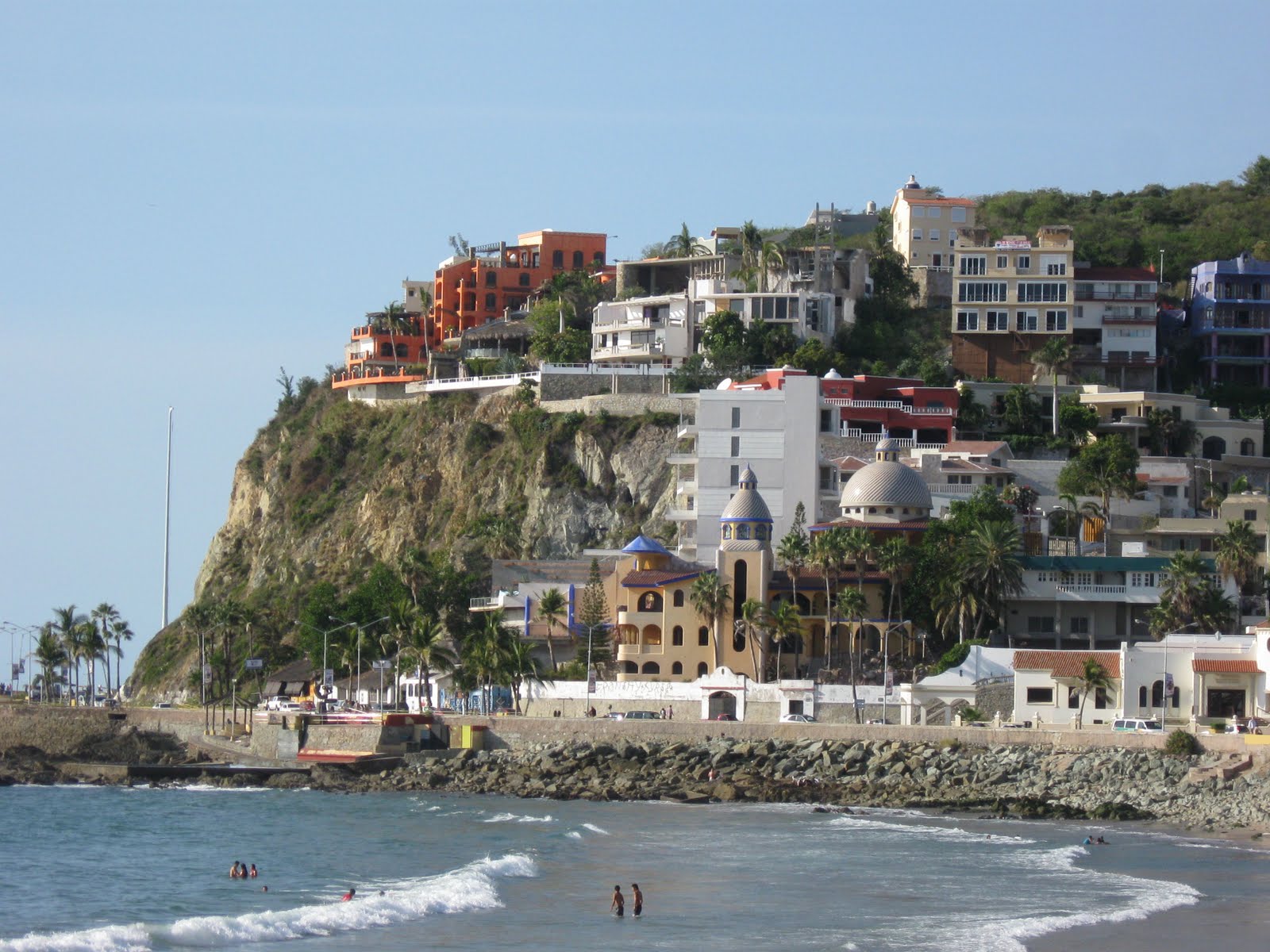
Mazatlan.

View from our hotel in Mazatlán.

Tlaquepaque is a kind of artsy town in the Guadalajara metro area. Lots of great restaurants and stuff to buy and lug home.

Here we are in a park in Guadalajara.

Sunday, January 03, 2010

More pictures from Oaxaca (by Cindy)


Happy 2010 to all.

I hope you each have a good year and keep your New Year's resolutions. My resolutions haven't changed, just been renewed - keep healthy with regular exercise and a good diet, keep practicing Spanish and the piano, read more nonfiction, and don't pass up any travel opportunities that come my way. The last resolution is, of course, the easiest to keep and we ended 2009 with a trip to Oaxaca in southern Mexico for the Christmas holidays. The state of Oaxaca has many beach resorts but our interest was directed toward the center of the state - primarily the city of Oaxaca (the capital of the state) and the ruins and villages near by.


Christmas and kids

We enjoyed several Christmas traditions, especially those where children took an active role.


These two cuties were in a procession on it's way to the Basilica.


There was a parade on Christmas Eve with floats and bands from each of the churches in town. Not surprisingly, every float was a live creche scene using kids. The shepherd is holding a real lamb.


This wise man is looking especially wise.


Is she pensive or just tired? I think riding around and around the zocalo can get pretty boring after a while.


Pyramids and tombs

Of course we had to visit several archaeological sites in the area. I think I read that there are more than 3,000 sites in Mexico. That could take us a while. We visited 5 on this trip.


Monte Albán sits on a mountain high above the Oaxaca Valley and the city of Oaxaca. The top of the mountain was leveled off to allow for the creation of this Zapotec ceremonial site.


I made Jim pose in one of the tombs discovered at Monte Albán because it's the first time we've ever been allowed to enter one.


This funerary statue was found in one of the tombs in the area. It intrigued me because it was female and human looking in a museum room full of fantastic creatures (animal gods perhaps?).


This shot of Yagul was taken from a fort on the hill. You can see the ball court in the lower left. Above that is a patio with an administrative building overlooking it. And in the center right are the maze like remains of the walls of a large residential complex called the Palace of Six Courts, named for its 6 porticoed courtyards (duh).


The tomb entrance above was at Yagul - too small to crawl into though I tried.


This mask of the Zapotec god of rain and thunder, Cocijo, decorated an altar at the nearby Lambyteco ruins and was still on site. I can't believe it wasn't put into a museum.


The buildings at Mitla are famous for the superb stone friezes that decorate their facades.


Here is a close up of some of the geometric designs. Imagine these brightly painted - awesome.


Streets, courtyards and crafts

We didn't spend the whole trip walking around ruins. In fact most of our ramblings were around the streets and parks of Oaxaca.


Bright sunshine, vivid colors, warm weather - who needs snow to celebrate Christmas?


I have no idea what this is or why she was standing in the street but we had to get a photo.


Latin America means courtyards - from the old and picturesque ...


... to the restored and stylish. (Our hotel)


And shopping - always lots of opportunities to shop. The area is famed for woven rugs, textiles, black pottery and wooden toys. I bought a blanket from this street vendor, made in his family's workshop he assured us.


We saw an unusual type of arts & crafts at Noche de los Rábanos (Night of the Radishes), an annual fiesta held two nights before Christmas. Locals compete to carve radishes into people, animals, and occasionally, churches.


A third of the displays were flowers and people made from corn husks - like these. Maybe they should change the name of the fiesta.


And more churches

But my favorite tourist attractions are still the churches, especially anything decorated in bright colors ...


... like this pulpit in the Templo de Santa María de la Asuncion in El Tule.


The church itself isn't bad either. (Templo de Santa María de la Asuncion in El Tule)


This is one of the bell towers of the Virgen de la Asunción in the village of Tlacolula.


The church of San Jerónimo in the village of Tlacochahuaya ...


... is decorated in vivid floral murals by local artists. Very unusual.


San Matías Jalatlaco in the city of Oaxaca was one of my favorites because of its simple altar accented in bright red and gold. Notice all the fresh flowers - we see lots of flowers in every church we visit.


The bigger churches often use bronze or richly gilded plaster to glorify God. Not exactly my cup of tea - still one cannot help but be impressed. This gilt-covered altar ...


... and pulpit are in the Church of Santo Domingo de Guzmán.


We were back in Guadalajara in time for a New Year's Eve celebration with friends. Who knows what 2010 will bring? I think we'll have some visitors and a trip to Bogota, Colombia. I'm sure there will be other adventures as well. We wish you all health, happiness and prosperity in 2010.

(To see more photos and a brief video of our trip check out Jim's blog entries in Dec. 2009.)