Showing posts with label Spain. Show all posts

Thursday, July 23, 2020

Public drinking and parties drive new coronavirus outbreaks, but sports give us some relief

Local boy Miguel Indurain celebrates his 5th Tour de France win 25 years ago
The virus has come roaring back in our province because of parties. New rules this week in our province of Navarra after big outbreaks of the virus among young people:
- Bars and discos have to close at 2 a.m. rather than 6 a.m.
- No public drinking of alcohol is allowed on the streets between 2 a.m. and 6 a.m. Which must mean that in the past it WAS permitted to drink alcohol on the streets between 2 a.m. and 6 a.m.
- From these new rules I conclude that after 6 a.m. you CAN drink alcohol on the streets. Is this a great country or what?

I'm part of the Dawn Patrol at the local cafe, which opens at 6:30 a.m. during the week and 7:30 a.m. on the weekends and has both daily newspapers. Having a coffee and reading the paper in the cafe is a ritual. I wear a mask between sips and maintain social distance. 
Up all night
The only time that young people show up that early is if they've been out all night. In Spain, among teens and young 20s, it has always been a thing to stay out all night with your friends. You come home at dawn. Parents expect it. We of the Dawn Patrol see young people only when they are staggering and talking loudly with extravagant hand gestures. They're not dangerous because in this country, not everyone is carrying a gun.

Wednesday, July 08, 2020

We visit the home of the vultures and the eagles


Eagles, vultures, and hawks build their nests in niches of the rock faces.


The bridge spans an old rail line, now a bike path.
It takes only about a half hour to get to the town of Irurtzun and the hiking trail known as "the vultures' overlook" el balcón de los buitres.

The trail itself is only about three miles in a loop, but it rises about 900 feet (a map of the trail is here).

The first third of the trail is quite steep and challenging before rising above the town and valley.

The Sunday we were there we heard the pipes and drums of a traditional Basque band playing 
below us in the town.

Tuesday, July 07, 2020

The town in need of some consonants: Aoiz

Cindy picked Aoiz for a day trip because it had a hiking trail to a famous hermitage or some such, so why not. When we arrived in the parking lot at the head of the trail, we were struck by this view of a medieval bridge. (Photos are from June 5; it was still cool here.)

This bridge across the Irati River dates to medieval times.
The Irati River, which it spans, is the same one that Hemingway fished in during his first visit to Pamplona. It had wonderful trout. That fishing trip was fictionalized famously in his first and best novel, "The Sun Also Rises", also known as "Fiesta". (Perhaps his worst novel is also about fishing and is the one that is most read, "The Old Man and the Sea", but we won't go there).

Speaking of old men, we ran into one by the map at the trail head. I asked him how local people pronounced the name of the town. "ah-oh-EETH", he said. I repeated "ah-oh-EETH", but evidently something was not to his satisfaction. So he said it again, a little louder and more emphatically. And I said back to him again what I thought I heard.

We went back and forth like this, but apparently I was a hopeless case. We chatted some more. The gentleman said he was 87 years old, retired for 27 years, walking with the help of a cane. He had worked in a furniture factory, if I'm not mistaken. He gave us some advice on what we should absolutely not miss on the hiking trail and headed off.  I should have taken his picture.

Senderos balizados, "marked trails" around Aoiz (Agoitz in Basque) and the reservoir.

The walled city of Artajona and ancient burial grounds

The walls and tower of Artajona date to the 12th century.

Cindy loves castles and walled cities, and there are plenty of them in Spain. One is less than an hour away, in the town of Artajona, which has 14 towers. The fortress was first built about 900 years ago. Invading armies have found an easy path into and out of Spain through Navarra.


  Local history is a chronicle of kings (who are like warlords) and princes (who are like gang leaders) pillaging back and forth, taking each other's land, goods, and people. The winners then build churches to honor the divine powers and saints who made it all possible.

We took the scenic route to reach the dolmens of Artajona.

Before arriving there, though, we wanted to look at the nearby funerary dolmens that have been dated at between 4,000 and 5,000 years old. Little is known about the people who built them except the tools they used and the types of animals and plants that were part of their diet. 

Wednesday, April 08, 2020

Letter from Spain: Living in isolation, Day 24

View from our balcony in Pamplona. Outside, it's spring.
I felt the first impact of the corona virus on March 12. Attendance in my Economics class was abnormally low, only 11 of the 24 students. Normally, I have attendance rates of close to 90%.

What happened? The numbers of sick and dead in Spain had started to rise. The fear was Spain might become another China, Iran, or Italy, where the virus was infecting and killing thousands.

I heard that students from Latin America and Asia were getting phone calls from worried parents, telling them to come home. News of growing numbers of infections in Europe had spooked them. Besides, the Easter break was nearing, and they wanted their kids home for all the traditional family gatherings.

My Chinese students told me by email that they had gone home because health standards were higher there than in Spain, where people were still behaving as though there was no danger. They would be safer in their home country, they believed. (These two students and a Japanese student were immediately put into quarantine upon arrival back home. As of a few days ago, all are safe.)

Still, the Universidad de Navarra, where I teach, had not yet canceled classes in Pamplona. I told students that for our next class, as an experiment, we would have class virtually, via a Zoom teleconference. "Just an experiment," I told them.

Then I went for a swim at a public pool. Far fewer swimmers than normal. Afterwards, I asked the lifeguard if I was taking a risk of catching the virus from other swimmers. After all, the water is in and out of people's mouths and noses. "Nah, no worries," he said. "The chlorine will kill anything in the water." Still, I made a mental note not to use the pool again. The next day, city authorities closed all the pools and community centers.

Monday, June 17, 2019

Life and death in a Spanish village

Villanueva de Aezkoa, from RutasdeNavarra.com
A friend of mine grew up in a pueblo about 35 miles from our home in Pamplona, in the mountains near the border with France.

His father died a few years ago, and his mother, in her 80s, was living by herself in a huge house with many rooms that she once rented out as a B&B. For many years she kept a big garden in back where she grew vegetables for the table and raised chickens and pigs.

When her health began to fail, she was diagnosed with an incurable illness. My friend's sister took a six-month leave of absence from her job to care for her mother at home.

In the last three weeks of her life, a doctor and a nurse from the national health care system came to see her every day. This despite the fact that the village doesn't have its own clinic. My friend drove the winding roads from Pamplona each night to be with her. His wife also often stayed with her. Even beating the speed limit, the drive takes about an hour and a half each way.

Saturday, March 10, 2018

Italian chefs are appalled at Spanish eating habits

"We're eating pizza all wrong," says the headline. Many of the toppings used in Spain are American style, not authentically Italian, say the aggrieved Italian chefs.
Italians have food rules. Let there be no mistake. And an article in a supplement to El Pais, called Buena Vida, or Good Life, in today's paper laid out the grievances of Italian chefs about their neighbors in Spain (here is the digital version of the supplement, but the article itself was not available online.)

Among the food atrocities:
  • Never use a spoon to eat pasta. That's only for children. Adults and anyone older than 6 should use a fork, the only proper instrument for eating pasta in a civilized manner.
  • Never cut up spaghetti before cooking it. And don't put in oil while cooking pasta. "I don't know why they do it," said Ilenia Cappai, owner of an Italian restaurant in Madrid. "It doesn't add anything." 
  • Don't serve the sauce separately from the pasta; they belong together. And, please, don't serve spaghetti with salsa bolognesa--the only proper pasta for that sauce is tagliatelle, says Cappai.
  • Also, we don't like your ham and olive oil, says Enrica Barni, another chef. Italian olive oil is the green product of a cold pressing. And Italian ham, prosciutto, comes from a much larger white pig than Spaniards use for their Iberian style. 
  • Spaniards use salt and pepper on their food before even tasting it, says Davide Bonato, chef at Gioia restaurant. An uncivilized practice. "They destroy the flavor of a dish." 
  • Spaniards eat bread with everything, too much bread. "Yesterday some clients ordered bread with their pizza," Bonato said, astonished. "Of course, I gave it to them, but . . . " 
  • Soft drinks are banned at a civilized Italian table. You drink only wine or water. Drinking Coca Cola at your grandmother's dinner table would be an insult, said Luca Gatti. 
  • At formal dinners in Italy, you never sit next to your spouse. The idea is to have others get to know your partner.
  • A pizza is for one person, never for sharing.
  • And at the end of the meal, the only acceptable form of coffee to have is an espresso, never a capuccino or cafe con leche--those are for breakfast. 
You have been warned. 


Sunday, February 11, 2018

My experience with the public health system in Spain

The issue of how to pay for health care is on everyone's minds these days, and there are arguments of various kinds on all sides. My aim is to describe here what it feels like to be in a public health system--one in which the government is the ultimate provider.

First, what you pay for health care

Public health care is paid out of tax income, and taxes are higher in Spain than the U.S. The U.S. is a relatively low-tax country: taxes represent 26% of GDP, while in Spain they are 34%. This includes all national and local taxes, property taxes, and sales taxes.

Since I am a full-time employee of the University of Navarra in Spain, I pay income tax and social security to the Spanish government, which comes to 24% of gross income (tax details here). My tax rate is slightly higher than normal because I am a foreigner. I pay no tax on this income in the U.S.

Sunday, April 03, 2016

Roman holiday in western Spain

Cindy inside the Moorish fortress in Mérida. The Visigoths built on top of the Roman fort, and the Moors built on top of that. Then came the Catholic kings . . . .
From the northeast of Spain where we live, Pamplona, to the wilds of Extremadura in the southwest is about eight hours by train or by car. We wanted to visit Mérida, which was an important Roman city 2,000 years ago and has many of the best preserved buildings from that era anywhere.

Extremadura is also famous for its hams, which come from pigs that run free and feed on acorns (bellotas). In the supermarket, Iberian ham runs for about $20 a pound. But the special purebred black pigs raised on certain farms produce hams that fetch $500 a pound or so in Japan and England.

Think Ben Hur


During Roman times, people in what is now western Spain were crazy for horse racing -- cuadrigas, or four-horse chariots, were the Formula 1 of the time -- and the horses from that part of Spain were famous throughout the empire for their speed and endurance. Many of the best charioteers to compete in the Roman Colosseum came from this region.

The Circus Maximus in Mérida was not excavated until the 19th century. It's about a half mile long, so it is comparable in length to a harness racing track. It could seat about 30,000 people.

Friday, September 04, 2015

Inspirational kickoff to the academic year

Uxue Barkos, president of Navarra, and Alfonso Sánchez-Tabernero, rector of the University. (Photo by Manuel Castells for El Español, Navarra.com)

PAMPLONA, Spain -- Some of my colleagues here at the University of Navarra have been anxious  since local elections in May brought in a new crop of populist reformers whose rhetoric sounds radical to them.

They think the university could be a target for the newcomers, given that it is private, Catholic and relatively expensive (though about a fourth as expensive as a comparable university in the U.S.).

So the university's rector, Alfonso Sanchez-Tabernero, showed himself to be an able diplomat when he addressed an audience of close to 1,000 faculty, local officials, and students today with a message that said essentially: We are ready to cooperate with and collaborate with whoever the local officials are. He was telling his staff, in effect, calm down, already. Don't worry. We'll survive.

But he was also sending a collegial message to the new leaders of the province of Navarra, who were with him on the dais. Very astute, I thought. He is in the photo above with Uxue Barkos, new president of the province. Barkos is the leader of the Basque coaltion. Some of her group would like to see Navarra, a wealthy province that is about 25% Basque, unite with the adjacent Basque Country region. This could have economic, political and cultural implications, such as the languages taught in schools.

Thursday, September 03, 2015

Academic terminology can be complicated

Some of the academic terminology here trips me up. At universities in Mexico, they said things one way. Here in Spain they say them differently.

Fortunately a friend of mine here, Prof. Samuel Negredo, has created an extensive Spanish-English glossary of academic terms. Some of the basics for me have been:

  • "Students" in Mexico were "estudiantes" mainly, but here in Spain they are almost always referred to as "alumnos." 
  • What we would call "alumni" here are called "antiguos alumnos" (old students) or "graduados" (graduates).  However I have sometimes seen and heard people here use the Latin plural "alumni" to refer to their graduates.
  • Mexican professors often referred to their students as "chicos", or boys and girls. And they would even address the classes that way: "Buenos días, Chicos." I didn't feel right doing that. It seemed counterproductive when I wanted them to act as adults. So after asking around, I came up with an  equivalent of "Ladies and Gentlemen" -- "Damas y Caballeros." That's what I use here. I was told that "Señoras y Señores" sounded way too formal.
  • "Grado" doesn't mean grade here but rather "major". To say "I am a journalism major in the Communication Department," you would say, "Estoy en el grado de periodismo de la Facultad de Comunicación." Those who are doing a bilingual major, with half their courses in English, are in the "grado bilingüe."
  • A "grade" is una nota or una calificación.
  • "Facultad", by the way, doesn't mean "faculty." It means "academic department". When you want to refer to "the faculty" you say "el profesorado", and the student body isn't "el cuerpo de alumnos" but rather the "alumnado".
  • What we call a "course", as in "a math course," is called an "asignatura" here in Spain, but in Mexico it was called a "materia". All three words come from Latin and all refer to the same thing but have different roots. 
  • And "curso" here is not a course but an "academic year". So we are in the "curso 2015-2016".
  • Una "clase" here is a singular event. It refers to the class you taught yesterday or the class you are going to teach today. If we want to talk about the class of 2015, you say "generación" or "promoción" de 2015.

Flunk and pass

 If you "pass a course" you don't pasar, you "aprobar" la asignatura. It comes from the same Latin root as "approve." To fail is "reprobar", and someone who has failed is "un reprobado" (English "reprobate" comes from the same root but has a different meaning).

At Tec of Monterrey in Mexico, a "classroom" was a "sala" or if it was really big, a "salón". A classroom building was called "Las aulas 1" or 2 or 3, which was very confusing to me at first because here in Spain the big lecture halls are called "aulas". And the building that houses the aulas is called the "facultad" or faculty. Confusing, yes? I mean, confusing, no?

Monday, June 22, 2015

People are still upset about a battle from 1521

The regional differences in the United States have nothing on those in Spain. People have really long memories here.

Today I was reading an advertisement in the local paper, the Daily News (Diario de Noticias) of Navarra, advertising a book called "The Battle of Noain," described as "the unfortunate episode of 1521".

Navarra, in dark green, is on the southwest border of France.
The ad describes how the powerful Castilians (read "Spanish") defeated the local forces and "invaded our town" (Pamplona), which had been part of the French kingdom of Navarre.

For just 6.95 euros, the ad reads, you too can read this story of how "our forefathers struggled and spilled their blood" in a desperate battle that led to "the loss of idependence of Navarra".

The Castilians "devastated a kingdom that was ahead of its time in every sense".

Add this volume of 128 pages to your collection of the History of Navarra, says the ad.

Thursday, June 18, 2015

40,000-year-old cave art and the north coast of Spain

My sister Nancy and her husband, Tom Lukens, came to visit in May and we spent a good deal of the time on the north coast of Spain. I dragged them along to one of my favorite places, the cave of Altamira, which has paintings dating back as far as 22,000 years ago.

Modern artist's interpretation of an Altamira painting of an aurochs.

You can get a sense of the brilliance of the paintings in the example above. The artists used bulges in the cave walls and ceiling to emphasize the musculature of the aurochs (cattle), deer, and horses they depicted.

Pablo Picasso visited the cave and said, "After Altamira, everything is decadence." The ceiling has been called the Sistine Chapel of prehistoric art.

Lifesize replica

The cave was discovered in 1879 when a tree fell and exposed an opening. Archeological work revealed that the cave had not been occupied for 13,000 years. The paintings were created over a span of at least 9 thousand years as different groups occupied the cave.

In the 1960s and 1970s, the site became such a popular tourist attraction that carbon dioxide in the breath of the thousands of visitors damaged the artworks. It was closed to the public in 1977.

Sunday, April 05, 2015

Holy Week in Spain: a religious tradition and tourist spectacle


Our Lady of the Pillar Church, Zaragoza, on the Ebro River
ZARAGOZA, Spain -- For those of you who like anniversary celebrations, this one is the oldest I know of: the 1,975th anniversary of the appearance of Our Lady of the Pillar to the Apostle James, and it occurred here in Zaragoza in 40 A.D.

James was discouraged about how hard it was to convert to Christianity the residents of what we now call Spain. The Virgin Mary appeared to him on a pillar and encouraged him to keep at it. Which he did. Today there is an amazing Baroque church dedicated to Our Lady of the Pillar in the heart of the city.

Holy Week processions

Zaragoza has dozens of cofradías that are known for their drum corps. Each of these groups has hundreds of members who participate in the Holy Week processions and observances. Each has a slightly different rhythm to their playing, but all beat the big bass drums hard.

Each has its own floats depicting religious scenes. Acolytes with censers fill the air with the smell of incense to create a visual, audio, and olfactory experience.

Sunday, August 24, 2014

How did you learn Spanish? One word at a time

Parade in El Alto in Bolivia, where I worked with newspaper publishers and editors.
When you go to parties, adults of a certain age often express one of two regrets. They wish they had stuck with studying piano. Or they wish they had learned a foreign language.

That may explain how Rosetta Stone booked $265 million in revenues last year (2013) offering its language learning products. They have great marketing.

The advertisements I see for various language learning products all suggest that with their special technique, you can learn to speak like a diplomat quickly and painlessly. I don't believe that.

Languages are a passion of mine. And while I find studying languages fun, interesting, and rewarding, I don't think that the learning is easy. Just like learning to play the piano, it takes practice. A lot of practice.

Sunday, July 03, 2011

Spain’s museums celebrate the simpler life

We are not that far out of the village.

Some of the museums we visited on our trip through Spain got me thinking about the unrecorded history of ordinary people.

Up until a century ago, the vast majority of the world, even in the West, was living in villages. Even today, more than half of China’s 1.3 billion people live in rural areas.

The history we learn does not focus on village life, where people were illiterate, but on on the civilizations that had developed writing. Writing recorded the doings of the rich and powerful.

The Museum of the Galician People in Santiago de Compostela in northwestern Spain goes some way to correct the omission.  The displays capture the detail of the crafts, homes, culture and language of these people.

A traditional Galician fishing boat.
Visitors can see their bagpipes, their farm implements and crafts, the fishermen’s nets and how they were made. This type of history by definition is harder to record. It depends on some published records and on inferences drawn from archeology and remnants of practices that persist today.

This museum was a welcome relief after several weeks of visiting palaces and castles and seeing the wealth accumulated by the warlords and thugs we call royalty.


Basque whalers roamed the world

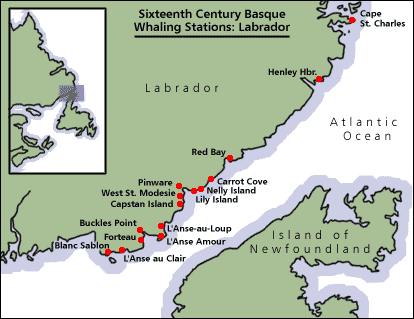
When we moved on to San Sebastian, in the Basque Country of northeastern Spain, I was delighted to discover the Maritime Museum’s exposition on the history of Basque whalers. (Moby Dick is one of my favorite books.)
From www.heritage.nf.ca
The village fishermen in Basque country developed the industry 1,000 years ago and ventured all over the North Atlantic. As early as the 1500s, they had established outposts in Newfoundland and Labrador. I was surprised to learn British and American whalers learned the trade from the Basques.

Stone age cave paintings


In Altamira, Spain, we visited a museum with breathtaking re-creations of cave paintings from 14,000 years ago. The artists who made them were hunter-gatherers who had not domesticated plants and animals.


This is a modern interpretation of a bison depicted in one of the cave paintings of Altamira, Spain. The original dates from 14,000 years ago. Our ancestors’ transformation from hunter-gatherers to farmers and fishermen took place over just a few thousand years.

The original cave has been closed to protect the paintings from deterioration caused by the press of visitors. However, the replica cave captures every curve and niche of the original with the aid of 40,000 laser measurements. A team of artists used materials as close to the original as possible to duplicate the effects of the Stone Age artists.


The museum has videos showing how these hunter-gatherers made their tools of stone and bone and how they might have hunted. People in some parts of the world still use these techniques. We are not that far removed in time from them. 


From village to city and back


All of this got me to thinking about what recent visitors we are to most of the known world. Although the genus homo has been around for several million years, our species, homo sapiens, is a newcomer. We left Africa only 40,000 years ago.

Only recently has our species had to adapt to all of the stresses of living in cities. That may explain why so many of our pathologies manifest themselves there. Villagers began leaving the country two centuries ago as the Industrial Revolution created new jobs, but the migrants have always expressed a desire to go back.

The return to the country is a theme of country music and the blues. We really want to go back home to the village. 

Addendum from Belarus

As it happens, today I am working in Belarus and it is their Independence Day. There are parades and celebrations everywhere. On national television, folk dancers and singers form various regions are performing. It is a celebration of the rich variety of village culture. 

Monday, June 13, 2011

We didn’t run into a lot of Americans in Spain

The sun and beaches are a big attraction for residents of cooler, cloudier northern Europe. There are three ferries a week from Portsmouth and Plymouth in England to Santander, shown here, on the north coast.
In a tapas bar in San Sebastian I heard American voices coming from several different corners. That’s unusual here in Spain. Salamanca has a Spanish language center for foreigners, so we heard Americans there.

But the U.S. doesn’t even make it into Spain’s Top 10 countries for foreign visitors. Great Britain is No. 1 with more than 12 million visitors to Spain, followed at some distance by Germany, France, the Nordic countries and Italy. Even tiiny Ireland, with 1/50th of our population, beats us out.

Mexico and Canada lead

Given that Spanish is taught in virtually every high school in America, it seems surprising that we don’t visit Spain more.


The top destinations for U.S. travelers in 2009 were:  Mexico (19.5 million), Canada (11.7 million), the United Kingdom (2.7 million), France (1.9 million) and Italy (1.8 million). followed by Germany, Japan and Spain.

Sunday, June 12, 2011

How to spend 9 weeks in Europe without losing your shirt

When I completed my contract in Mexico in December without having another one lined up, Cindy came up with the idea of taking two or three months to travel around Europe. We might never again have the free time to do it, she reasoned. 


We originally considered an involved itinerary that inlcuded several places we always wanted to see -- the Greek Islands, Sicily, the Cinque Terre in Italy -- but found the logistics were too complicated. We decided to focus on one country, Spain, with a visit to our daughter in Germany at the end. 


We bought plane tickets and rail passes and Cindy began the process of building a budget-minded itinerary. In the end, the all-in cost for nine weeks in Europe was a little more than twice what we spent for two weeks in Ecuador and the Galapagos Islands.

Sunday, May 15, 2011

Sunday morning, in search of a cafe

The Spanish operate on a different clock, and by that I do not mean they are casual with appointments as they are in Latin America. I mean that the rhythm of their daily lives is quite different.

It is Sunday morning here in San Sebastian, and at 7 a.m. I went looking for a cafe where I could read and have a cafe con leche. There was nothing open but a news agency on the square near our pension so I walked out to the main street. Little knots of young people were on their way home after the long night of drinking and partying. They were drunk but in the Spanish way, which means they were singing and talking loud, not stumbling and puking, but swaying.

Wednesday, May 11, 2011

Tapas or pinchos are our favorite food in Spain


Typical snacks at a bar include all kinds of concoctions like deviled ham on bread with a little slice of salmon, a few small shrimp with veggies in a sauce on a crust of bread, a mini-hamburger, some olives, some peanuts with lemon juice, curried chicken, a bit of paella, some Iberian ham and cheese, a slice of spanish tortilla (a potato-egg pie), a slice of pizza or almost anything you can imagine. Unlike traditional tapas, which were a very small snack offered free as a courtesy with every drink, these cost $1.50 to $2.50 apiece. Two people can make a meal out of four of them.